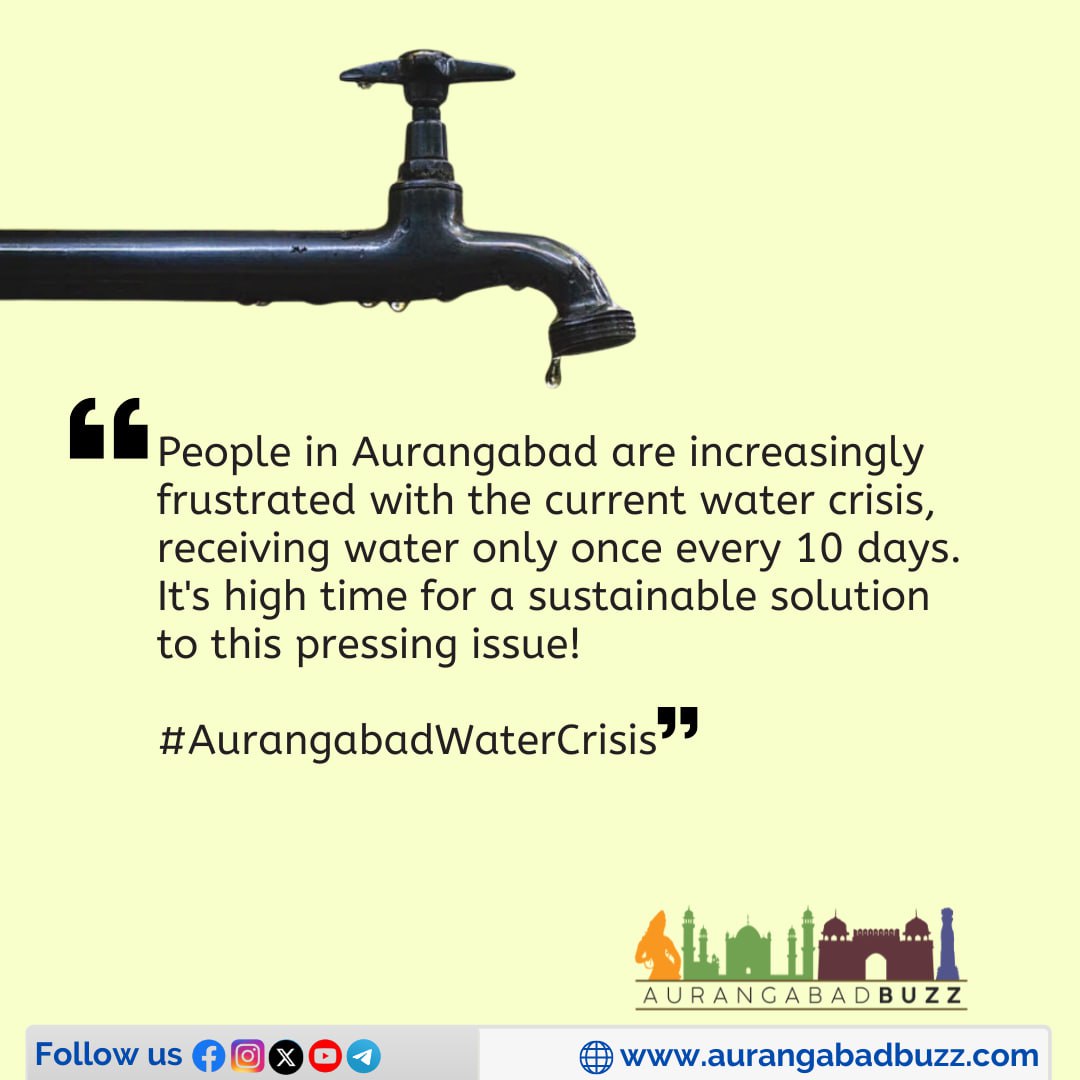
Water is one of the most necessary of life’s necessities, yet thousands of residents across Aurangabad continue to face severe challenges in accessing a regular and reliable water supply.
In many parts of the city, residents report receiving water only once every ten days, forcing families to store water for extended periods and carefully manage their daily consumption. The situation has become a growing source of frustration and concern among citizens, particularly during the summer months when water demand is at its highest.
The recurring water crisis affects households, students, senior citizens, businesses, and institutions alike. Many residents are compelled to depend on private water tankers, leading to additional financial burdens. Others spend significant time and effort planning around uncertain water schedules.
As the city continues to expand, the water demand is increasing. This has raised important questions about water management, infrastructure development, conservation efforts, and long-term planning. While temporary measures may provide short-term relief, many citizens believe that a sustainable and permanent solution is needed to address the issue effectively.
Experts and community members often emphasise the importance of improving water distribution networks, reducing leakage and wastage, expanding storage capacity, promoting rainwater harvesting, rejuvenating water bodies, and ensuring efficient utilisation of available resources.
The water crisis is not merely an inconvenience; it is a quality-of-life issue that impacts public health, education, economic activity, and overall urban development. Access to clean and sufficient water is essential for a growing city and should remain a priority for policymakers and civic authorities.
Residents across Aurangabad continue to hope for lasting solutions that can ensure a regular and dependable water supply for every household.
As discussions around the issue continue, one message is becoming increasingly clear: the city needs a sustainable water management strategy that can meet present needs while securing the future for generations to come.
What are your thoughts on the current water situation in Aurangabad? Share your views and suggestions in the comments.
About the Author

